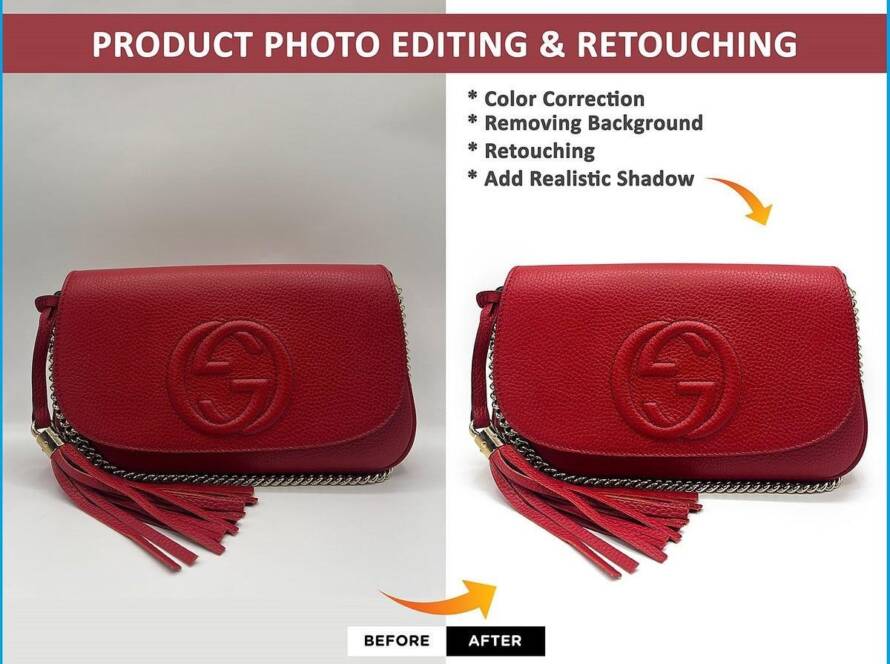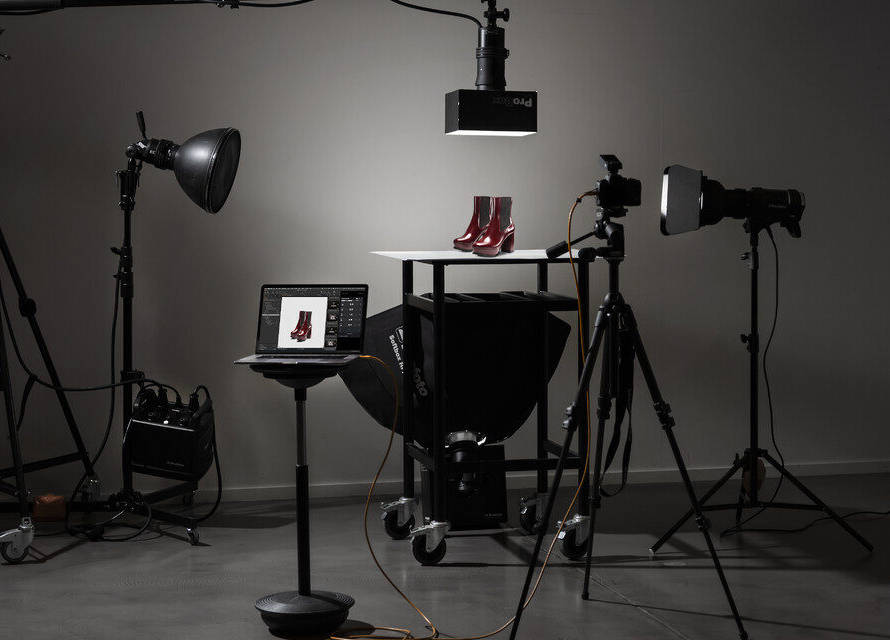


For fashion and eCommerce brands, product imagery is no longer just a creative requirement.
It is part of the customer experience.
Customers use images to understand a product, evaluate its quality, compare it with alternatives, and decide whether they want to continue exploring.
Amazon itself describes ecommerce images as a visual stand-in for the product, while emphasizing that multiple angles and detailed imagery help customers evaluate what they are buying.
But producing consistently strong images at scale can become difficult.
A brand may work with hundreds or thousands of product images every season. At that volume, the question isn’t simply:
“Is this image well edited?”
The better question is:
“Is our entire retouching operation performing as well as it could?”
That’s where benchmarking retouching services becomes important.
Benchmarking gives brands a structured way to compare quality, turnaround, consistency, scalability, communication, and cost—and identify where their current workflow may be falling behind.
What Is Benchmarking in Retouching?
Benchmarking means comparing your current retouching performance against a defined set of standards.
These standards can come from:
- Your previous projects
- Internal production targets
- Competitors
- Industry expectations
- Vendor performance
- Marketplace requirements
- Your own brand guidelines
Instead of relying on opinions such as “these images look better,” benchmarking gives your team measurable criteria.
For example:
| Benchmark | What to Measure |
|---|---|
| Quality | Editing accuracy |
| Consistency | Image-to-image uniformity |
| Turnaround | Delivery speed |
| Scalability | Volume handled |
| Revisions | Number of correction rounds |
| Accuracy | Product/color preservation |
| Communication | Response and issue resolution |
| Cost | Cost per image/project |
This gives brands a much clearer picture of what they are actually getting from a retouching partner

Why Benchmarking Matters for Fashion and eCommerce Brands
Imagine two vendors.
Vendor A delivers beautiful individual images.
Vendor B delivers slightly less impressive individual images but maintains the same lighting, color, cropping, shadows, and product presentation across 2,000 SKUs.
Which vendor is more valuable to an ecommerce brand?
In many cases, Vendor B.
Why?
Because ecommerce doesn’t display products one image at a time.
Customers see grids, collections, category pages, product galleries, advertisements, and marketplace listings.
Consistency across those images matters.
Recent industry discussions similarly emphasize evaluating ecommerce imagery at the catalog or gallery level, rather than judging isolated hero images.
1. Benchmark Image Quality
The first benchmark should always be quality.
But quality needs to be clearly defined.
Look at:
- Background cleanliness
- Edge accuracy
- Color correction
- Fabric texture
- Skin retouching
- Shadow quality
- Wrinkle removal
- Product shape
- Reflection control
- Overall realism
Don’t simply ask:
“Does it look good?”
Ask:
“Does it meet our brand’s defined quality standard consistently?”
2. Benchmark Consistency
Consistency is one of the most important—and most overlooked—benchmarks.
Consider a catalog containing 500 apparel products.
If some images have:
- Bright white backgrounds
- Others warm backgrounds
- Different crop sizes
- Different shadow directions
- Different garment positioning
- Different color treatment
the catalog can feel unprofessional even if every individual image looks acceptable.
A strong retouching workflow should create a visual system rather than a collection of unrelated images.
3. Benchmark Color Accuracy
Color is especially important for fashion.
A customer may order a blue garment based on an image and receive something that looks noticeably different.
That gap can affect customer expectations and potentially contribute to dissatisfaction.
Benchmark your vendor on:
- Color accuracy
- Skin tones
- Fabric colors
- Product variants
- Consistency across batches
- Monitor and workflow practices
Color should not simply be made “more attractive.”
It should remain faithful to the actual product.
4. Benchmark Turnaround Time
Speed matters, particularly during:
- New collection launches
- Black Friday
- Holiday campaigns
- Seasonal drops
- Marketplace launches
- Product updates
However, faster isn’t automatically better.
A vendor delivering 1,000 images quickly but requiring multiple correction rounds may create more work for your team.
So measure:
Total time from upload → final approval
rather than simply:
Time from upload → first delivery.
5. Benchmark Revision Rates
Revisions are another useful performance indicator.
Track:
- Number of images requiring corrections
- Average revision rounds
- Most common errors
- Time spent on revisions
- Percentage approved on first submission
If your team repeatedly sends the same feedback, the problem may not be individual editors.
It may indicate that your vendor lacks:
- Clear style guides
- QA procedures
- Reference images
- Project documentation
- Feedback tracking
6. Benchmark Scalability
A vendor may perform extremely well on 50 images.
But can they maintain that quality at 5,000?
That’s a different question.
When evaluating scalability, ask:
- How many images can they process daily?
- How do they handle peak volumes?
- Do they have dedicated teams?
- What happens during seasonal spikes?
- How is quality maintained at higher volumes?
Scalability should mean more capacity without a significant drop in quality or consistency.
7. Benchmark Quality Control
A professional retouching workflow should have quality control built into the process.
Look for:
Editor → QA → Client Review → Final Delivery
rather than:
Editor → Delivery
QA should check things such as:
- Product accuracy
- Color
- Cropping
- Background
- Shadows
- File specifications
- Naming
- Brand guidelines
A structured workflow can make quality more predictable at scale.
8. Benchmark Cost—But Don’t Benchmark Price Alone
Price is important.
But comparing vendors purely by cost per image can be misleading.
For example:
Vendor A
$0.50/image
But:
- More revisions
- Slower approvals
- Inconsistent output
- More internal QA
Vendor B
$0.80/image
But:
- Better first-pass accuracy
- Fewer revisions
- Consistent output
- Faster final approval
The second vendor could actually have a lower total cost of production.
That’s why brands should evaluate:
Cost per approved image
rather than simply:
Cost per edited image.
9. Benchmark Communication
A retouching vendor isn’t working in isolation.
Your team may include:
- Photographers
- Creative directors
- Merchandisers
- Marketing teams
- eCommerce managers
- Catalog teams
Communication therefore becomes part of production efficiency.
Evaluate:
- Response times
- Project updates
- Feedback handling
- Escalation process
- Revision communication
- Dedicated account support
Poor communication can turn a simple editing project into a long production cycle.
10. Benchmark Security and File Handling
Your retouching partner may receive unreleased products and campaign assets.
That means security should be part of vendor evaluation.
Ask about:
- NDAs
- Secure file transfer
- Access controls
- File retention
- Data deletion
- Employee access
- Third-party access
- Incident response
Security shouldn’t be treated as an extra feature.
It should be part of the vendor-selection process.

Create Your Own Retouching Scorecard
Instead of choosing a vendor based on a portfolio, create a scorecard.
For example:
| Criteria | Weight |
|---|---|
| Image Quality | 25% |
| Consistency | 20% |
| Turnaround | 15% |
| Scalability | 10% |
| Color Accuracy | 10% |
| QA & Revisions | 10% |
| Communication | 5% |
| Security | 5% |
You can then score each vendor from 1–10.
This gives your team a more objective comparison.
Don’t Benchmark Vendors Using Only One Image
This is one of the biggest mistakes brands make.
A vendor can make one image look exceptional.
That doesn’t tell you how they perform across an entire catalog.
Instead, create a representative test batch.
For example:
- Simple product
- Dark product
- White product
- Complex fabric
- Patterned garment
- Transparent material
- Reflective product
- Model image
- Ghost mannequin
- Difficult edges
Then evaluate the entire batch.
This gives you a much better understanding of real-world performance.
Recent vendor-evaluation guidance similarly recommends testing providers with sample edits and checking consistency, technical specifications, turnaround, QA, and security rather than relying solely on portfolios.
Benchmarking AI vs. Human Retouching
AI has changed the image-editing landscape.
Automated tools can be useful for repetitive tasks and high-volume workflows.
But brands should benchmark AI using the same standards they apply to human editing.
Ask:
- Is the product still accurate?
- Are patterns preserved?
- Is fabric texture realistic?
- Are edges clean?
- Are colors correct?
- Is the result consistent across batches?
- How much human correction is required?
The question isn’t:
“Is AI faster?”
The better question is:
“Does the final approved image meet our benchmark?”
For some workflows, AI can accelerate the first stage. Human quality control may still be needed where product accuracy and brand consistency are critical.
What Competitive Brands Should Benchmark Every Quarter
Your benchmarking process shouldn’t happen only when hiring a new vendor.
Review performance regularly.
Quarterly benchmark:
Quality
- Are quality standards improving?
Speed
- Are turnaround times meeting targets?
Consistency
- Are catalog images becoming more uniform?
Revisions
- Are correction rates decreasing?
Cost
- Is the cost per approved image sustainable?
Scalability
- Can the workflow handle upcoming volume?
Technology
- Are new tools improving production without compromising quality?
This creates a continuous improvement cycle.
How Mubytech Approaches Retouching Performance
At Mubytech, we believe retouching should be evaluated as a production system, not simply as an editing task.
Our approach focuses on:
- Consistent visual standards
- Professional retouching
- AI-assisted workflows where appropriate
- Human quality control
- Scalable image production
- Catalog consistency
- Structured workflows
- High-volume processing
The goal is not simply to deliver more edited images.
It’s to help brands produce consistent, accurate, campaign-ready imagery at scale.
The Real Competitive Advantage
The strongest brands aren’t necessarily the ones spending the most on every individual image.
They’re the ones that have built a repeatable visual production system.
They know:
- What good looks like
- How quality is measured
- Where bottlenecks occur
- How revisions are controlled
- How vendors are evaluated
- How production scales
- When technology should be used
- Where human expertise remains essential
That’s the real value of benchmarking.
It turns image editing from an unpredictable production expense into a measurable business process.

Conclusion
Benchmarking retouching services isn’t about finding the cheapest vendor.
It’s about finding the right balance between quality, consistency, speed, scalability, security, and cost.
Your product images represent your brand every time a customer sees them.
So the question shouldn’t be:
“How much does this image cost?”
It should be:
“How much value does this workflow deliver—and how consistently can it deliver it?”
Brands that measure their visual production can identify weaknesses, improve workflows, reduce unnecessary revisions, and make better vendor decisions.
And in a competitive ecommerce market, that operational advantage can become a visual advantage too.